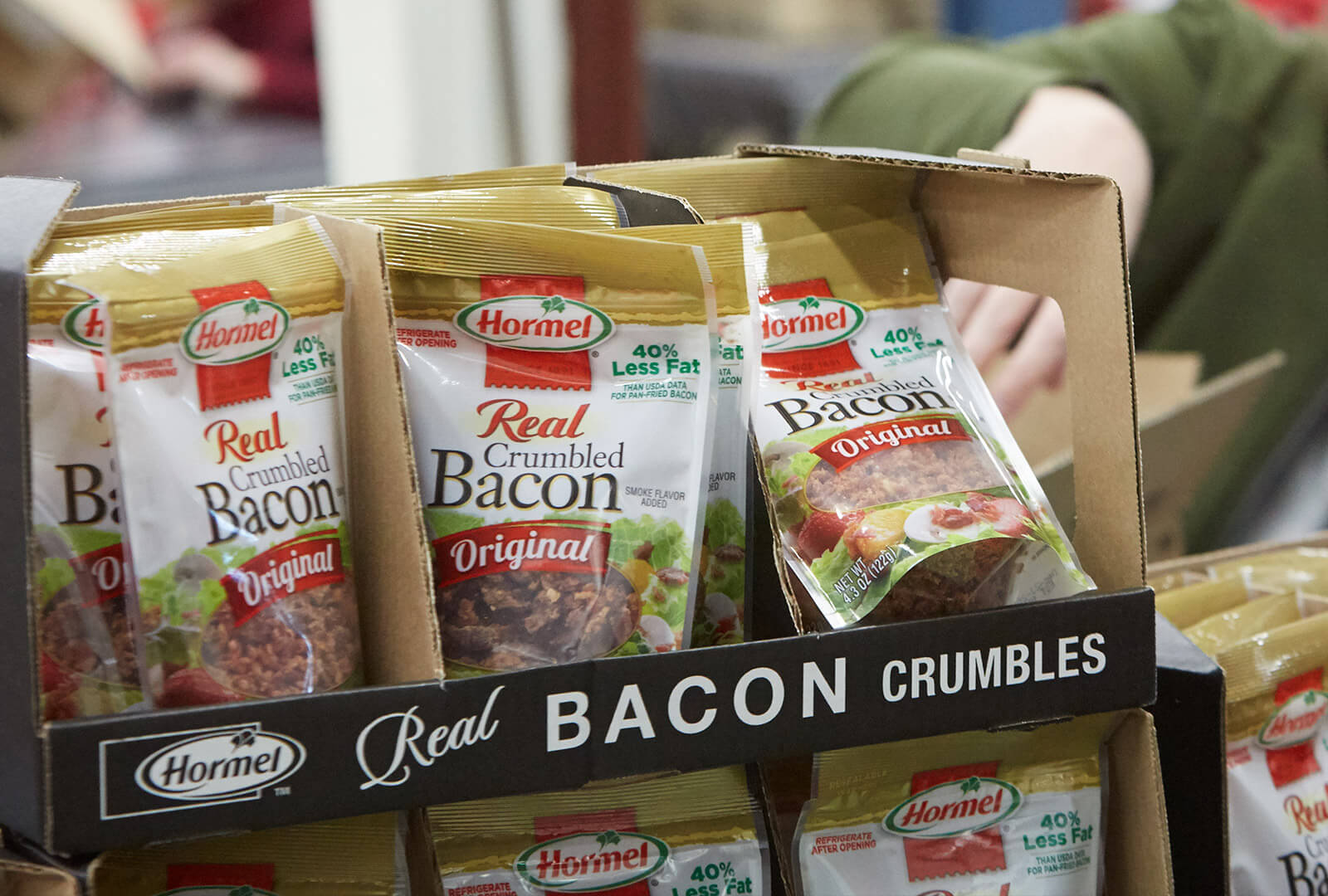
The mind-bending complexity of how food is packaged is something most consumers don’t pay much attention to. Consider the fact that there are over 11,000 distinct materials used to package Hormel Foods products. Figuring out exactly how to make those materials maximally efficient and sustainable falls to an elite group with an ambitious goal: In 2012, the packaging development team was challenged to reduce total packaging material by 25 million pounds by the year 2020. With only a year to go, the team’s job is getting more difficult.
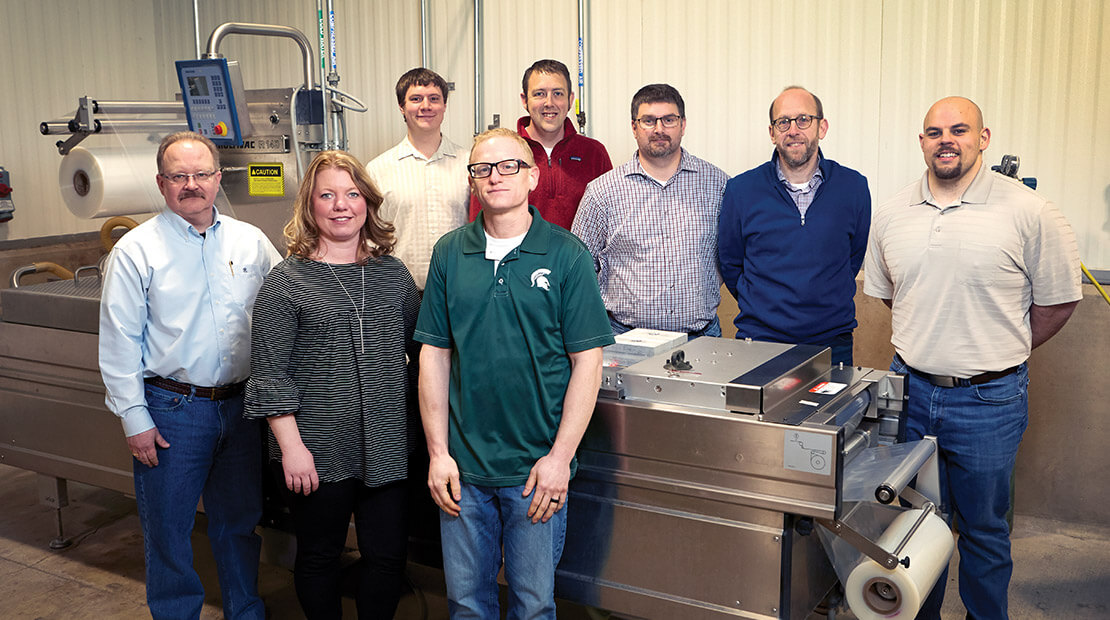
The task boils down to this: examining each one of those 11,000 packaging components, finding ways to eliminate some and figuring out how to use the rest more efficiently. This might mean changing a package so shrink wrap is no longer required or eliminating a paper sleeve. It might mean reducing the weight of a plastic jar slightly or redesigning a shipping box so there’s no empty space. A job on the Hormel Foods packaging research and development team, which is comprised of eight members, comes with some substantial expectations.


Reducing packaging weight by 25 million pounds was a tall order to begin with, but the challenge is compounded by the fact that Hormel Foods had already, long before 2012, pioneered practices and technologies to make its packaging some of the most efficient and cost-effective in the industry. The motivation to keep optimizing is a confluence of environmental and business goals. Less material used in packaging means less money spent. Similarly, reducing a product’s weight and size creates savings during its transportation and storage. Lightweight, efficient packaging is also increasingly appealing to sustainability-minded consumers conscious of the environmental impact of the foods they choose and the waste their production, packaging and consumption create. Even more, when consumers buy Hormel Foods products, they expect the value of the purchase to be contained in the meal or snack — not in the jar, pouch or wrapper.
When you produce as many products and as much food as Hormel Foods does each year, even small changes can have a big impact. Just eliminating some extra space in Jennie-O® turkey burger cartons, for instance, saved more than 175,000 pounds each year. A redesign that removed 23 percent of the corrugated shipping box for Hormel® Compleats® meals saved 1.2 million pounds.
“We have a lot of capabilities here that people don’t know about,” said Miller. “We only have to walk down to the R&D facility to talk to a scientist about how a particular product behaves so we can make sure that product stays perfect for consumers. That helps us make changes relatively quickly. But having those resources inhouse also means that the knowledge we gain with each project can be applied to the next.”
One challenge the group faces is that packages change along with consumers’ eating habits. “Consumers want portability and smaller portions,” packaging engineer Chad Donicht explained. “They want just the right size so when they open the package, food isn’t wasted. That’s where a lot of the fast changes are coming right now.”
The packaging R&D team believes it’s on track to meet its challenge. “We’re at 99 percent of our 2020 goal of 25 million pounds,” said Miller. “And we’re planning on getting there.”