TheFarmer
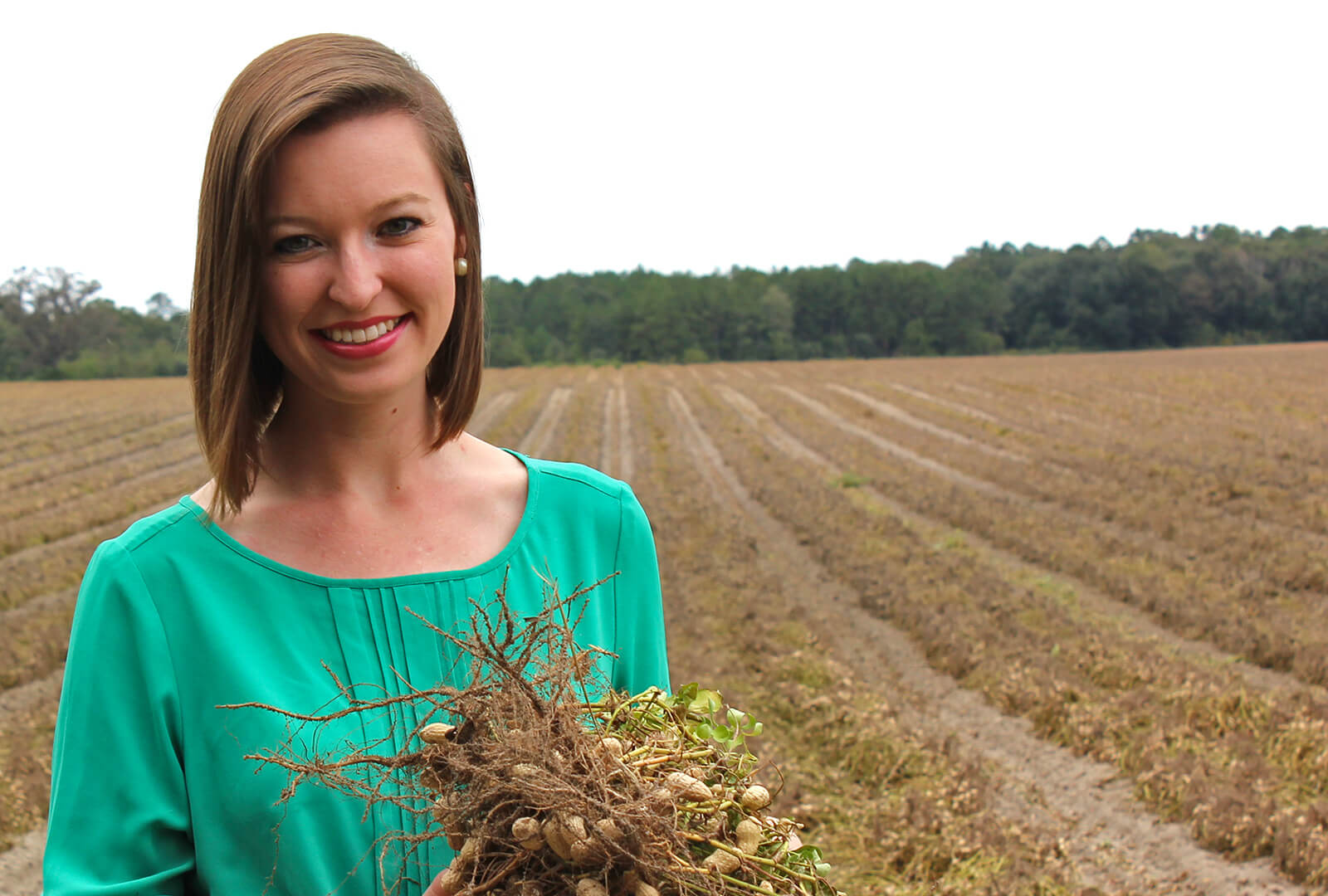
The story behind each one of the over 90 million jars of SKIPPY® produced each year begins with farmers. Glenn Cox and his daughter Casey work a few hundred acres of land along the Flint River in Mitchell County, Ga. At 25 years old, Casey, who is still learning to run the family farm from her parents, will be the sixth generation on the same land. Their farm, which they call Longleaf Ridge, has been producing peanuts for close to 100 years.
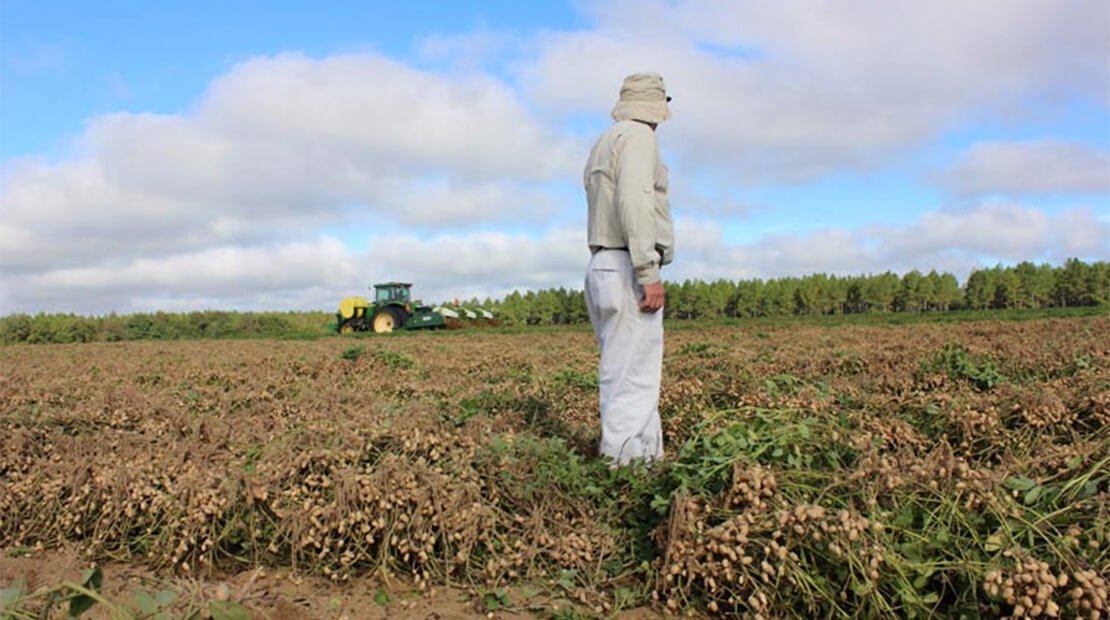
Glenn Cox of Longleaf Ridge
From the time she could walk, Casey has followed her dad, Glenn Cox, out into the fields and often sat with him during long days on the tractor. Entering adulthood, she wasn’t sure she was going into the family business. Then, after a couple months at college, she realized how much farming was in her blood. “I had no plans to move back to Georgia,” she says. “But then it hit me just what a special place I had grown up in and how important that land along the Flint River was to me.”
Now, just a few years back from getting her degree in natural resources conservation, she’s splitting her time between farming and working as executive director of the Flint River Soil and Water Conservation District. Her parents could not be more excited about the new ideas she’s brought home. “They both instilled in me the idea that we were stewards of the land,” she says. “To be a good farmer, you have to be a good conservationist.”
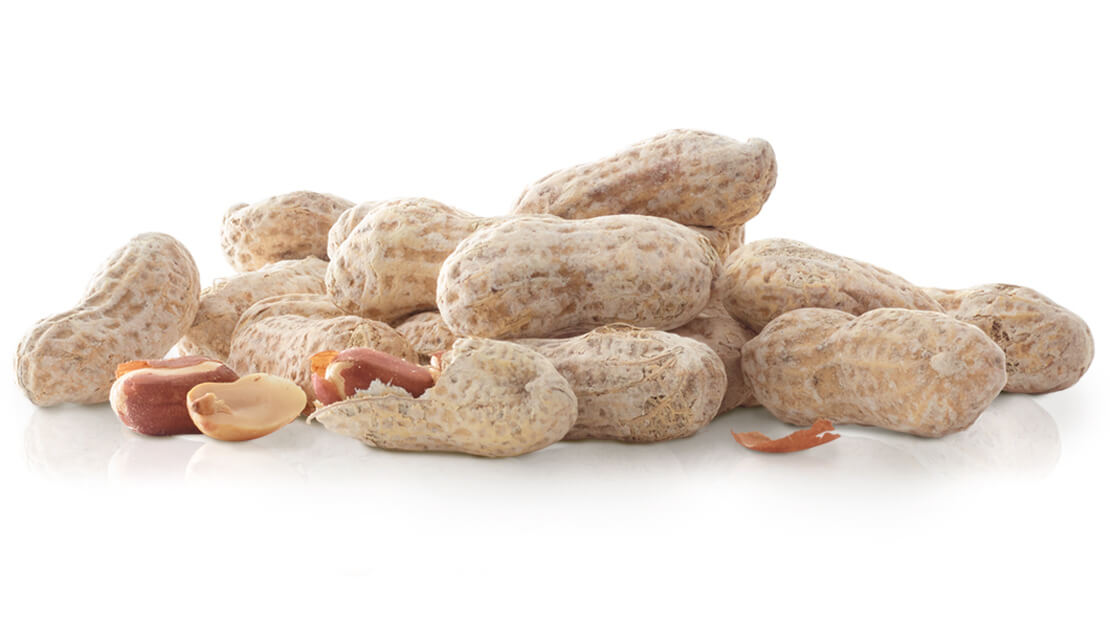
Longleaf Ridge is one of about 25,000 peanut farms across the South. They grow the Runner variety, which is found across Georgia, Texas, Alabama, South Carolina and Oklahoma, and is the type most commonly used for making peanut butter. The Runner is slightly smaller than the Virginia, the type of peanut you might get at a ballpark, but the Runner’s uniform kernel size makes it superior for uniform drying and roasting.
The season begins as soon as spring gets a firm hold on the weather. A couple weeks after planting, Casey and her father check on the peanut plants poking out of the soil, each with four little leaflets that look a bit like clover. After about 40 days, the plant flowers and then does something quite rare in the botanical world. The flowers fade and are replaced by tiny stems that reach back down into the soil, where they grow individual peanut pods a couple of inches under the surface. In the end, each planted seed will produce between 25 and 50 new peanuts.
After about five months, it’s time for the two-stage harvest to begin. A “digger and shaker” machine is pulled across the field. It cuts the tap root, lifts and shakes off the soil and inverts the plant so the peanuts can begin their drying process with two or three days in September sunlight. Another machine then separates the peanuts from the plant and the haul is loaded into container trucks and shipped to a buying station.
The smell of the harvest—a particular combination of earth, hay and peanuts—is something that Casey still loves. “It’s hard to describe,” says Cox. “But for someone who’s grown up on a peanut farm, there is no nicer smell.”
Each day we produce enough jars of SKIPPY® peanut butter to fill 21 trucks.”
Roger Vos, SKIPPY Foods plant manager
TheManufacturer
Roger Vos, the Skippy Foods plant manager in Little Rock, Ark., does not come from a long line of people in the peanut business. As a 32-year veteran of Hormel Foods, however, he’s spent much of his working life overseeing key departments at a variety of food processing facilities. Although he’s no stranger to large-scale production, when he first toured the Skippy Foods facility a few years back, he was floored by the scale.
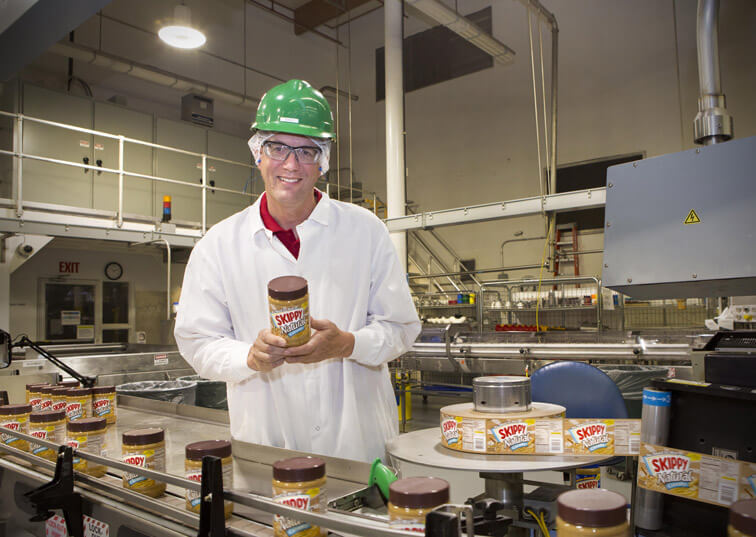
Roger Vos, SKIPPY Foods plant manager
“The sheer volume that the factory produces was impressive and a little overwhelming,” he remembers. “The plant processes four rail cars of shelled peanuts every day. That’s 800,000 pounds of peanuts. Each day we produce enough jars of SKIPPY® peanut butter to fill 21 trucks.”
In the Skippy Foods plant, the shelled peanuts first travel through a hot air roaster, and are shaken and roasted evenly. This machine turns the peanuts from a pale color to light brown. Next, the blancher removes any outside skins. The nut is split and the hearts, which have a slightly bitter taste, are removed. The peanuts are then ground into a paste and combined with some salt, a little sugar and vegetable oil to stabilize the mixture.
Vos is keenly aware of how much work each one of those rail cars of peanuts represents. Vos grew up on farm in Oskaloosa, Iowa, that grew soybeans, corn and feeder pigs—some of which his family sold to Hormel Foods. “Our job is to make a safe and delicious product for our customers,” says Vos. “And in doing that, we’re also fulfilling our commitment to our farmers and shellers so that they can stay in business. Our job here is critical to supporting thousands of farms and hundreds of communities.”