
Ask any chef about the food truck movement, and you’ll likely hear the name Roy Choi. In 2008, Choi opened Kogi, a shabby but scrumptious taco truck in Los Angeles, which is basically considered the first gourmet food truck known — and worshipped — by the masses. Choi’s empire has since exploded. His list of accomplishments in the 10 years since Kogi was founded is extensive. He was named Food & Wine’s best new chef and made Time’s 100 Most Influential People list, under the pioneers section.
It’s not unheard of for a chef to move from a table-and-chair restaurant to a food truck by choice. Take John McConnell, for example. The executive chef at the Clif Family Winery’s Bruschetteria Food Truck in Napa Valley, Calif., was the former chef de cuisine for the Michelin-star-rated Campton Place Restaurant, Bistro & Bar in San Francisco. Yes, you heard that right, a chef who used to head a Michelin- starred venue now spends his days working out of a food truck.
Other cultural factors pushed the food truck scene forward, too. The Food Network premiered “The Great Food Truck Race” TV series; Zagat gave food trucks their own category; the movie “Chef,” starring Jon Favreau, tells the story of a disheartened chef who reclaims his culinary visions via a groovy food truck. The cultural momentum goes on and on.
-

![]()
People taking photos with the APPLEGATE® brand food truck.
-

![]()
People taking photos with the JENNIE-O® brand food truck.
-

![]()
People taking photos with the SPAM® brand food truck.
Tony Finnestad, one of the chefs of Hormel Foods, puts it like this, “When we lived in Austin, Texas, there was always a somewhat friendly rivalry between Austin and Portland over who had the best food truck scene in the U.S. Portland’s was bigger and slightly older, but Austin’s was growing quicker and arguably better.”
Finnestad said it’s all linked to the economy. “If you look back at when food trucks became really popular, I mean actually popular and not just more popular than before, it was when the economy was at its worst. Fine-dining restaurants and the whole fine-dining scene took a turn for the worse, and many very good restaurants started to close. There were simply fewer people willing and able to pay $100 for a meal for two on a whim. Many chefs started opening fast-casual and casual restaurants. But there was an even quicker route to having your own spot: food trucks. Cheaper, faster and much more approachable for a mass audience, and the food could be just as good as that of many brick-and-mortar restaurants.”
Finnestad gives a big nod to the social media aspect of it all, too. “The Twitter and Instagram games have changed the food truck landscape completely, and even small cities like Traverse City, Mich., have food truck scenes now. If you’re in the area, look up thelittlefleet.com.”
Sure, food trucks probably go back to ancient times in one form or another, but the moment is definitely now. It’s one of the hottest trends in the restaurant industry since farm-to-table eating. And often, those two go hand in hand. With the fresh ethnic flair, constant online excitement, affordable prices and mouthwatering menus, it’s hard to see anything but more delightful success for food trucks everywhere.
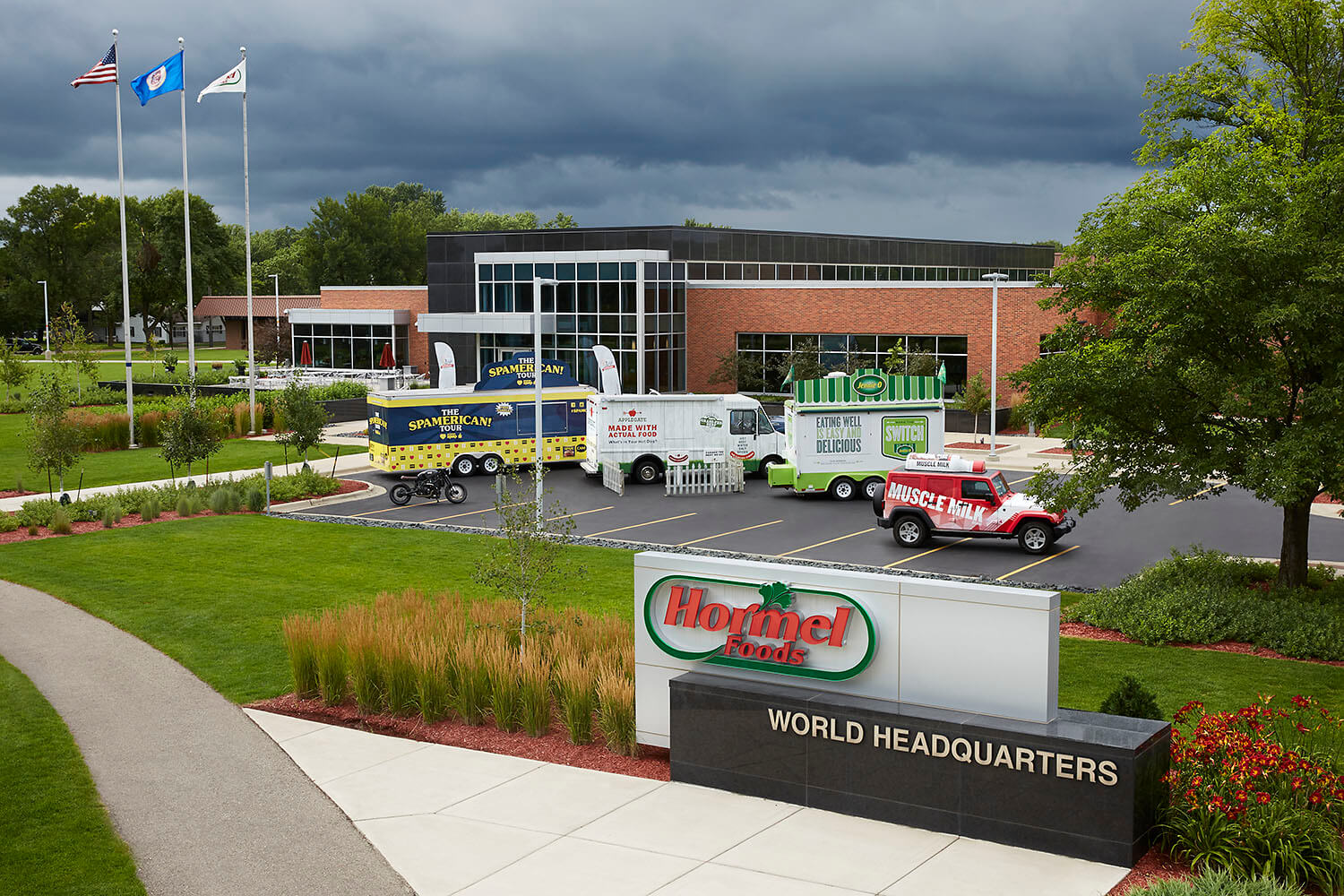
Hormel Foods branded food trucks in July 2016.